
Basement Epoxy Floors & Moisture in the Red River Valley
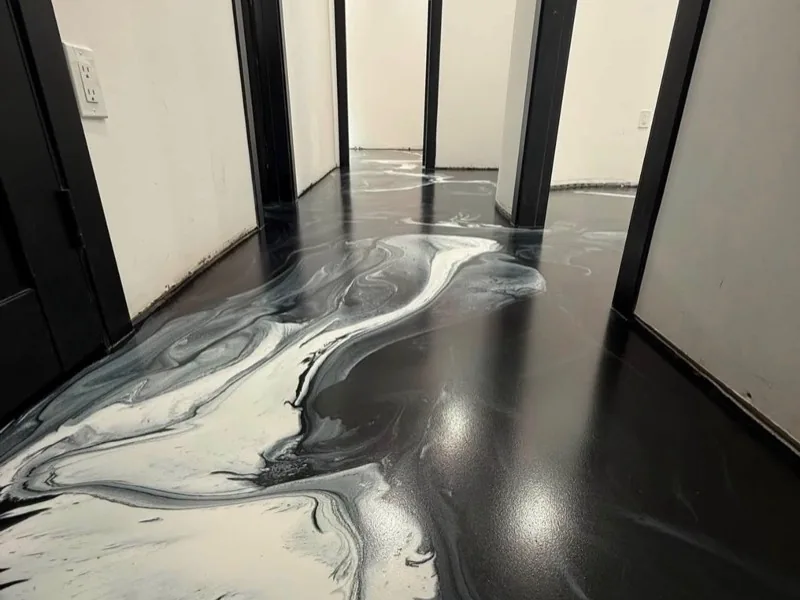
Quick answer: A basement floor in Fargo–Moorhead can often be coated with epoxy if moisture is understood first. Heavy clay soil and seasonal water tables mean some slabs transmit vapor or water, which can make coatings blister. We review sump pump history, damp spots and test options before recommending anything. Call (701) 815-5240.
Basement floors are among the most rewarding places to install epoxy, and also the most likely to disappoint if moisture is ignored. In the Red River Valley, where the ground is clay-heavy, the water table can be high and spring melt is a way of life, a careful look at moisture is not optional. This guide explains the issues, the testing approaches and the decisions.
Why moisture is a bigger question here
The valley floor is the bed of an ancient glacial lake, and the soil is dense clay. Clay holds water and drains slowly, so groundwater around a foundation can stay high for long periods, especially after snowmelt or heavy rain. Many homes in Fargo, West Fargo and Moorhead have sump pumps for this reason. Some basement slabs are bone-dry year-round; others show damp patches, efflorescence (white mineral deposits) or occasional seepage at the cove joint where the wall meets the floor.
Two kinds of moisture
Moisture vapor transmission is water vapor moving up through the slab. It is invisible and gradual. If it is high, it can push on a coating from below and cause blisters, white spots or loss of adhesion.
Hydrostatic pressure and liquid water is groundwater pushing through cracks or the slab itself. A coating cannot hold that back, and it can fail quickly. In this case, the problem must be solved with drainage, waterproofing or a sump system first.
Signs to look for
- Dark, cool or damp patches that come and go
- White powdery deposits on the floor or wall
- A musty smell, particularly after rain or thaw
- Sump pump cycling frequently
- Water at the base of walls after storms
- Old coatings that bubbled or peeled
- Rust on metal feet or stored items
Common test methods
Industry practice includes several simple and technical tests:
- Plastic sheet test. A taped sheet of plastic is left on the slab for a period; condensation underneath suggests moisture is moving up.
- Calcium chloride test. A dish of calcium chloride sits under a dome and absorbs moisture vapor, measured as a rate.
- In-slab relative humidity probes. Probes set in drilled holes measure the humidity inside the slab.
Which tests make sense depends on the project, and results guide system selection. Moisture-tolerant primers exist for borderline slabs, but they are not a cure for active water.
What we do at the estimate
For basement projects we ask about sump pump history, past leaks, damp areas, the age of the slab and any previous coatings. We look at the floor, walls and cove joints and talk through risk. If the slab appears dry and stable, we describe system options. If there are warning signs, we explain what needs to happen first, whether that is testing, a moisture-tolerant primer, a drainage fix, or waiting through a thaw season. We would rather tell you not to coat than install a floor that fails.
When it is a good idea to wait
- The house is new and the slab is still curing
- The basement leaks after storms
- The sump pump runs constantly in spring
- Visible efflorescence is spreading
- You plan to remodel soon and may disturb the slab
When a basement is a great candidate
- The slab is dry, with no history of water problems
- Floor drains and sump systems work correctly
- You want a clean, washable surface for a laundry room, workshop or gym
- You are finishing a lower level and want an easy-clean look that holds up to kids and pets
System choices
For laundry and utility areas, flake provides traction and hides dirt. For entertainment spaces, metallic offers a more polished look, with a flat prep. See flake epoxy floors, metallic epoxy floors and flake vs metallic. Warmth is another consideration: a coated slab stays as cool as the concrete, so many homeowners use rugs.
What improves the odds
Keep gutters and downspouts directing water away from the foundation, check that grading slopes away, and maintain the sump pump. These inexpensive steps lower slab moisture. They also protect any coating. For general install details, see our process page and prep and warranty guide.
Call or text (701) 815-5240 for a free basement estimate.
Frequently Asked Questions
Can I epoxy a basement with a sump pump?
Often yes if the slab is stable and the pump is working properly. We review the pump's history and the slab's condition before recommending a system.
Will epoxy waterproof my basement?
No. A coating is not waterproofing. It protects the surface but cannot hold back groundwater.
What is efflorescence?
A white mineral deposit left when moisture moves through concrete and evaporates. It is a sign to investigate moisture.
How long after construction can a slab be coated?
Many contractors suggest allowing new concrete time to cure and release moisture before coating. We evaluate on site.