
Epoxy Prep & Warranty in Fargo, ND
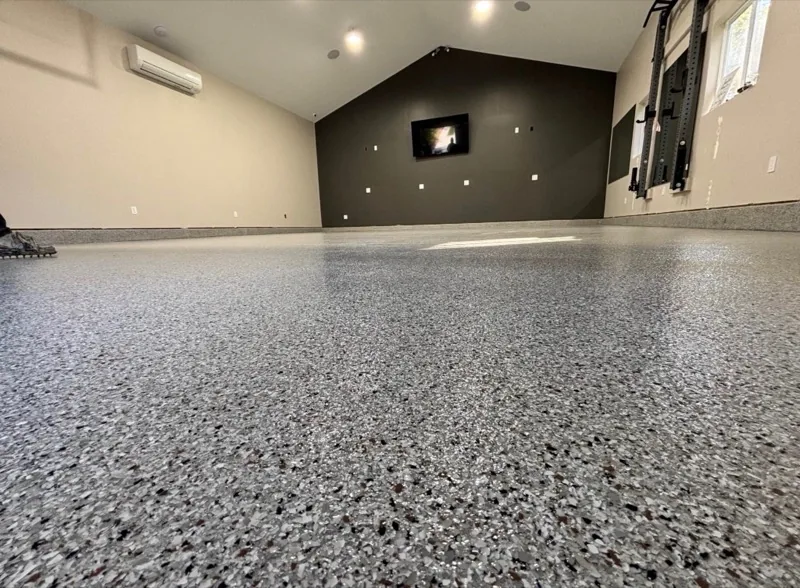
Quick answer: Epoxy fails most often at the bond line, so Fargo Epoxy starts with an on-site review, diamond grinding, crack and joint repair, and a moisture conversation before any resin is mixed. Warranty terms are confirmed in writing per contract and typically cover workmanship and adhesion when prep was followed on a suitable slab. Call (701) 815-5240.
A coating is only as good as the connection between the resin and the concrete. In the Fargo–Moorhead area, where freeze-thaw cycles, road salt and moisture are part of every year, that connection is tested hard. This page explains how Fargo Epoxy approaches surface preparation, what supports a lasting floor, and what warranty conversations should cover. We confirm actual warranty terms in writing on each quote, so use this page as a plain-language guide to the topic rather than a contract.
Why prep determines whether a warranty means anything
Epoxy and polyaspartic coatings bond to the surface of concrete. If that surface is dusty, oily, sealed, weak or damp, the coating can look perfect on day one and peel within a year. Typical problems include laitance (a weak layer of fine particles on top of poured concrete), curing compounds and sealers, oil that has soaked in beneath parking spots, old paint or failed coatings, and moisture moving through the slab. A warranty that assumes professional prep is only meaningful if that prep is actually done.
Our standard preparation sequence
1. Evaluation We look at the slab, ask how you use the space, and note cracks, spalls, stains, previous coatings and areas that stay damp. For newer slabs and basements, we discuss cure time and moisture.
2. Mechanical profiling Diamond grinding (or shot blasting on some larger commercial floors) removes weak material and creates a profile the resin can grip. Chemical etching and light sanding are not substitutes.
3. Crack and joint treatment Cracks and joints are opened, cleaned and filled with a repair material that fits the situation. Moving joints are detailed, not simply covered. Concrete in North Dakota and Minnesota expands and contracts with temperature, and a coating that ignores a moving joint will crack over it.
4. Contamination control Oil that has penetrated the slab can prevent bonding. We treat or grind out contaminated areas where possible and tell you honestly if deep contamination limits the result.
5. Cleaning All dust is vacuumed. The slab is inspected again before the first coat is mixed.
6. System build Primer or base coat, broadcast or metallic layer and topcoat are selected for how you use the floor, within the product's temperature range for application and cure.
7. Cure and walkthrough We tell you when the floor can take foot traffic, light loads and vehicles, and walk it with you to check coverage and details.
What a warranty typically covers
Warranty terms are specific to each contract and are confirmed in writing before work begins. In general, a workmanship warranty from a prep-focused contractor addresses defects in installation and adhesion failures caused by application, provided that the agreed preparation was done and the slab was a suitable substrate.
Typical exclusions include:
- Abuse, impact damage, or dragging metal across the surface
- Chemical exposure outside the topcoat's rated resistance
- Hydrostatic pressure and moisture problems that originate in the slab or foundation
- Structural movement, new cracks or settlement
- Alterations or repairs by others
- Normal wear, such as scuffing and gloss changes over time
Ask any contractor to give you these items in writing, and compare them, not just the length of the term.
Cold-climate conditions that affect longevity
Rinse salt and grit from the floor, particularly near the door. Use mats at entries and pads under jack stands and metal furniture. Avoid solvents that are not rated for the topcoat. Try not to add moisture sources like piles of wet snow to a recently cured floor. For more, see the cold climate guide.
A homeowner's checklist for comparing bids
- Does the bid include diamond grinding for the entire floor?
- How are cracks and joints treated?
- What are the minimum temperatures for application and cure, and how will they be managed?
- What topcoat is specified, and why?
- What is the cure schedule before walking and driving?
- What does the written warranty cover and exclude?
Bids that skip mechanical prep or use interior-only clear coats in exposed areas are common failure patterns. We would rather specify the right system, or decline, than chase a low number that cannot last.
Next steps
Read the installation process, the cost guide and the FAQ, or call or text (701) 815-5240 for an on-site review with warranty terms in writing.
Frequently Asked Questions
Is a warranty worth more than good prep?
No. Good prep is what makes any warranty valuable, because most failures start at the bond line.
Does the warranty cover moisture problems from below?
Typically not. Hydrostatic pressure and slab moisture are excluded in most coating warranties, which is why we review moisture first.
Who handles repairs if there is a problem?
Call us at (701) 815-5240. We assess the cause on site and explain what is covered under your written terms.
Is sanding or acid etching enough?
For a durable garage floor, no. Mechanical grinding is the accepted way to create a bond profile.