
Garage Floor Epoxy vs Paint in Fargo, ND
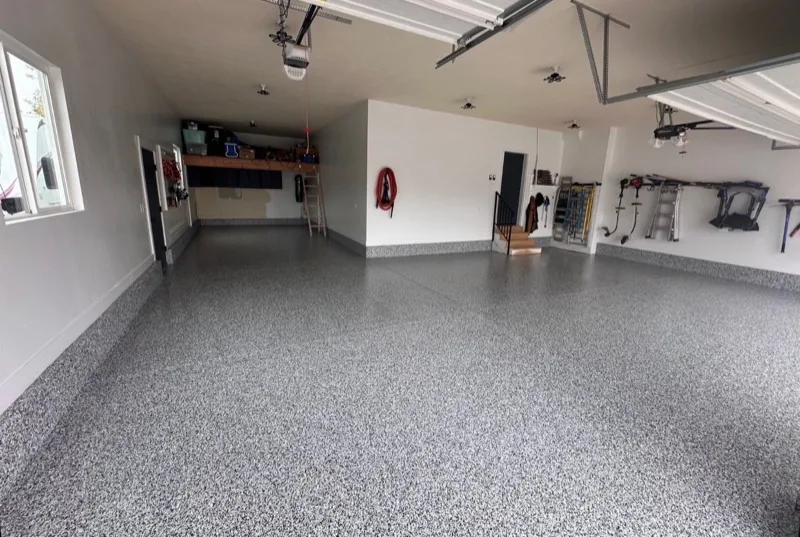
Quick answer: In Fargo-area garages, epoxy or polyaspartic systems on diamond-ground concrete generally outlast paint, because paint is a thin film that struggles with hot tires, road salt and freeze-thaw moisture. Paint costs less up front and can work for light-duty, low-traffic floors. Call (701) 815-5240 for a floor-specific opinion.
Painting a garage floor sounds like the cheapest way to make it look better, and sometimes it is a reasonable choice. But in a place where cars drag salty slush into the garage for half the year and the temperature routinely crosses freezing, the difference between paint and a properly installed epoxy system can be the difference between a floor that lasts and a floor that peels in months. This guide compares the two honestly.
What is the difference?
Concrete floor paint is a thin, usually water- or solvent-based coating rolled over cleaned or lightly etched concrete. Some products are marketed as "epoxy paint," which blends a small amount of epoxy resin into a latex or acrylic paint. These are thin films, typically a few mils thick.
Epoxy and polyaspartic systems are multi-part coatings that chemically cure into a hard, thick film. A professional system starts with a mechanically prepared slab, includes a base coat and often a decorative broadcast, and finishes with a durable clear topcoat. Thickness is many times that of paint, and the bond to a diamond-ground surface is far stronger than to an acid-etched one.
Comparing the two in a Fargo garage
| Factor | Garage paint | Professional epoxy or polyaspartic system |
|---|---|---|
| --- | --- | --- |
| Surface prep | Cleaning, light etching | Diamond grinding and crack repair |
| Film thickness | Thin | Much thicker, built in layers |
| Hot-tire pickup | Common failure point | Designed to resist when properly prepared and cured |
| Road salt and chemicals | Limited resistance | Chemical-resistant topcoat |
| Freeze-thaw movement | Peels where moisture escapes | Better bond, sealed surface |
| Appearance | Flat color, shows wear | Flake, solid or metallic finishes |
| Typical upfront cost | Low | Higher |
| Typical lifespan | Shortest | Longest |
Hot tires, road salt and freeze-thaw
Hot tires. After a drive, tires are warm and soft. They can lift the bond of a weak coating and pull it up in patches. Paint is most likely to fail here, often within the first season. A well-prepared, properly built system resists this.
Road salt. Chloride brine travels on every vehicle in winter. Paint is thin and permits moisture to wick through pinholes, which leads to staining and flaking. A sealed system with a chemical-resistant topcoat keeps brine on the surface.
Freeze-thaw. Moisture that gets into concrete expands when it freezes. If the coating cannot let that happen without delaminating, it peels. Mechanical profiling, crack repair and a firm bond line are what keep a floor intact. See the cold climate guide for the mechanics.
When paint can be reasonable
- Low-traffic storage areas or utility spaces
- A rental or short-term situation where durability is not the point
- Floors that cannot be properly ground or are not structurally sound enough to bond a thicker system
- A temporary refresh while saving for a better floor
Be realistic about maintenance, because paint will need recoating.
When epoxy or polyaspartic is the better call
- Daily-driver garages with salt and slush exposure
- Garages with heavy traffic, workbenches or equipment
- Anyone who wants a floor to look good over many years
- Spaces where oil, fuel or chemicals are present
- Homeowners who want a particular decorative look, such as flake or metallic
The hidden problem with DIY kits
Many big-box epoxy kits are essentially thick paints, with little more thickness than a good garage paint, and require etching rather than grinding. In cold climates, DIY coatings often fail at the doorway, where meltwater and brine collect, or under hot tires. If you are considering a kit, ask yourself how you would prepare the slab, whether it will be warm enough during application and cure, and what you will do if it peels.
Cost over time
Paint costs less on day one. But if you repaint every year or two, or have to grind off failed coatings, the savings vanish. A professional system costs more up front and is intended to last far longer. The cost guide shows the labeled national ranges and what moves price.
How to decide
Ask what the floor will do. If it only needs to look neat in a storage space, paint may be fine. If it needs to survive winter, tires and years of use, choose a prepared epoxy or polyaspartic system. For a floor-specific opinion, call or text (701) 815-5240.
Decided paint will not last under hot tires and road salt? Our garage floor epoxy in Fargo page covers flake, solid and metallic systems, and the Fargo epoxy flooring home page explains how a project works from estimate to walkthrough.
Frequently Asked Questions
Is "epoxy paint" the same as epoxy flooring?
No. Epoxy paint is a thin paint with some epoxy content. A professional epoxy system is a thick, multi-coat film bonded to a ground slab.
Can epoxy go over painted concrete?
Only if the paint is well bonded and can be profiled. Peeling paint must be removed. We assess adhesion on site.
Will paint hold up in a Fargo winter?
It can for a while on low-traffic floors, but hot tires, salt and freeze-thaw usually shorten its life.
What do I need to do before an epoxy install?
Clear the garage. We handle grinding, repairs and coating.