
Garage Floor Epoxy Coatings in Fargo & the Fargo–Moorhead Area
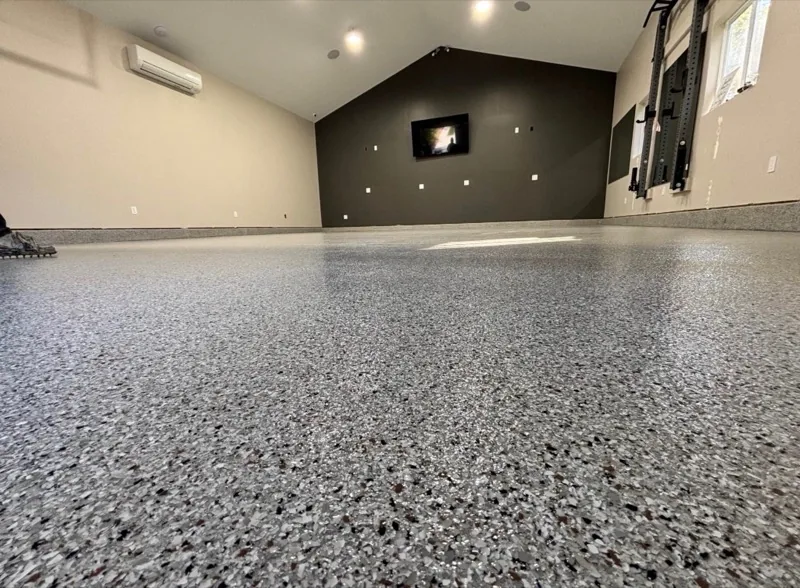
Quick answer: Fargo Epoxy installs garage floor epoxy and polyaspartic coatings in Fargo, ND, with diamond-ground prep, repaired cracks and a chemical-resistant topcoat designed to shrug off road salt, snowmelt and hot tires. Most homeowners choose a flake system; metallic and solid color are also available. Call (701) 815-5240 for a free garage estimate.
A garage floor in the Fargo–Moorhead area has a harder life than almost any other surface in a house. For about half the year, every vehicle that pulls in carries a coat of slush, sand and de-icing brine, and it all melts onto the slab. Water soaks into the pores of bare concrete, then freezes and thaws again when the garage cycles above and below 32°F, and the slab slowly dusts, stains, spalls and cracks. A professionally installed garage floor coating seals that surface and turns the slab into something you can sweep, squeegee and mop.
Fargo Epoxy installs garage floor coatings throughout Fargo, West Fargo, Moorhead, Horace, Dilworth and the surrounding communities. Our work is built around preparation, because the finish you can see is only as durable as the bond you cannot.
Garage floor coating systems we install
Flake epoxy is the most requested system in northern garages. Colored chips are broadcast into a wet base coat and then sealed with a clear topcoat. The chips hide dirt and salt residue, add a little texture for wet shoes, and cover small imperfections in the concrete. Read more on the flake epoxy floors page.
Solid color epoxy is a clean, uniform look with a smooth finish. It is a good option for shop-style garages and for owners who prefer a simple, bright floor. Solid colors show dirt and tire marks more readily than a chip blend, so they suit people who like to keep the floor clean.
Metallic epoxy is the decorative choice. Pigments swirl through the resin for a glossy, one-of-a-kind floor. See metallic epoxy floors for details, and the flake vs metallic comparison if you are choosing between them.
Polyaspartic topcoats can be placed over a flake or solid base for a harder, UV-stable finish that returns to service faster than many epoxy topcoats. They are worth considering for garages with large south- or west-facing doors, or for owners who cannot park outside for several days. The tradeoffs are covered in polyaspartic vs epoxy.
How we prepare a garage slab
Most failures in garage coatings start at the bond line, not at the surface. In practice that means the preparation matters more than the brand name on the bucket. For a Fargo-area garage, our approach is:
- Walk the floor with you and note cracks, spalls, oil stains, previous coatings and any area that stays damp.
- Diamond-grind the entire slab to remove laitance and weak surface paste and to create the profile the resin needs to grip.
- Fill and repair cracks, joints and chipped edges so movement does not telegraph through the finished floor.
- Treat oil spots where tires have sat, since contamination can prevent the resin from bonding.
- Vacuum thoroughly before the first coat goes down.
The grinder dust and the finish work both need a cleared garage. Vehicles, shelving, freezers and storage need to be moved out, so plan an alternate parking spot for a few days. The process page describes timing in more detail.
Built for a Red River Valley garage
Several local conditions affect how we specify a garage floor:
- Road salt and chlorides. Rock salt, calcium chloride and magnesium chloride all travel on tires into the garage. A sealed floor keeps chlorides on the surface where you can rinse them away.
- Freeze-thaw movement. Slabs expand and contract with temperature, and joints and cracks need to be detailed for that movement. Our cold climate guide explains why.
- Heated vs unheated garages. Most epoxy and polyaspartic products have a minimum slab temperature. If your garage is attached and heated, winter installs are often possible. If it is detached and unheated, we talk through timing honestly.
- Hot tires and chemicals. Cars pull in warm after a drive, and hot tires can lift weak coatings. The wear coat is chosen with this in mind.
- Wet entry areas. Slush puddles near the garage door can make a glossy floor slick, so texture options are available for wet-entry zones.
Sizes and typical scopes
One-car garages in older Fargo and Moorhead neighborhoods are often tight, and many have cracked or patched slabs that need extra repair time. Two-car garages are the most common project in West Fargo, Horace and newer subdivisions. Three-car and oversized garages, workshops and RV bays change the amount of material and the time on site. We measure and write the scope on the estimate so you can see what is included. For budgeting, the epoxy cost guide explains what moves the price.
Professional coating vs a DIY kit in a Fargo garage
Big-box garage kits are thin, single-component or water-based films rolled over concrete that usually has not been ground. In a mild climate they can look fine for a while. In Fargo, salt brine sits on the floor for months and studded or hot tires press into the film every day, so kits tend to lift first where the tires park and near the door. A professional system starts with diamond grinding, uses much thicker, multi-coat products and finishes with a chemical-resistant topcoat. That is the difference between a coating that is still bonded after several winters and one that peels by spring.
If you are weighing cheaper options, our garage epoxy vs paint guide compares them honestly.
Hot tires, yellowing and what the topcoat does
Two complaints come up again and again with garage coatings. Hot-tire pickup happens when warm tires soften a thin or poorly bonded film and pull it off the floor. Grinding, proper film thickness and a hard topcoat prevent it. Yellowing happens because standard epoxy can amber in sunlight, which shows most by the overhead door. A UV-stable polyaspartic topcoat keeps the color true. Both issues are reasons we rarely leave plain epoxy as the wear surface on a Fargo garage. The polyaspartic vs epoxy guide goes deeper.
Care after installation
After the cure period we provide, a coated floor needs little more than sweeping, an occasional mop with a neutral cleaner, and prompt cleanup of oil or chemical spills. Avoid dragging heavy metal across the surface, and use pads under jack stands. In winter, squeegee meltwater toward the door when you can. The prep and warranty page explains what protects the coating and what is excluded.
Request a garage estimate
Estimates are free and done on site, with no obligation. Call or text (701) 815-5240 or send the quote form, and tell us roughly how big the garage is and what you would like it to look like.
Frequently Asked Questions
How long does a garage epoxy install take?
Many residential garages are prepared and coated over one to two days, depending on grinding, repairs and the system. Cure windows before vehicle traffic are explained at the estimate, because they depend on the product.
Can you coat my garage in winter?
Often yes, when the garage can be kept within the temperature range the product needs. We check slab and air temperature on site. Unheated detached garages may need a warmer window.
Do I have to empty the garage?
Yes. Vehicles and storage need to be cleared so we can grind edges and place a continuous coat.
Will the floor stand up to hot tires and road salt?
A properly prepared, properly built system is designed for both. Preparation is the biggest factor in whether it does.
Is epoxy slippery when wet?
Smooth gloss floors can be slick when wet. Flake blends provide natural texture, and added grip can be specified for wet-entry areas.
What is the best garage floor coating for North Dakota winters?
A ground and repaired slab with an epoxy base, full flake broadcast and a polyaspartic topcoat is the most common choice for Fargo garages, because it handles road salt, meltwater and hot tires and gives texture under wet boots.
Can you coat over my old garage floor paint?
No. Existing paint, sealers and DIY coatings are ground off first so the new system bonds to bare concrete. Coating over them is one of the most common causes of peeling.
How do I keep a coated garage floor clean in winter?
Squeegee meltwater out after storms and mop with a pH-neutral cleaner every week or two during the salt season. Dried salt leaves a dull film that rinses off a sealed floor easily.
How do I choose a garage floor epoxy installer in Fargo?
Ask how the slab will be prepared (diamond grinding, not acid etching), how cracks and control joints are handled, which topcoat goes on top and whether it is UV-stable, how cold-weather installs are heated, and what the written warranty covers. Our prep and warranty page explains our standards, and the cost guide shows what changes a quote.
Detached shop, pole barn or ag building? See shop and pole barn floor coatings.
Call (701) 815-5240