
Freeze-Thaw, Road Salt & Snowmelt — Fargo–Moorhead Garage Guide
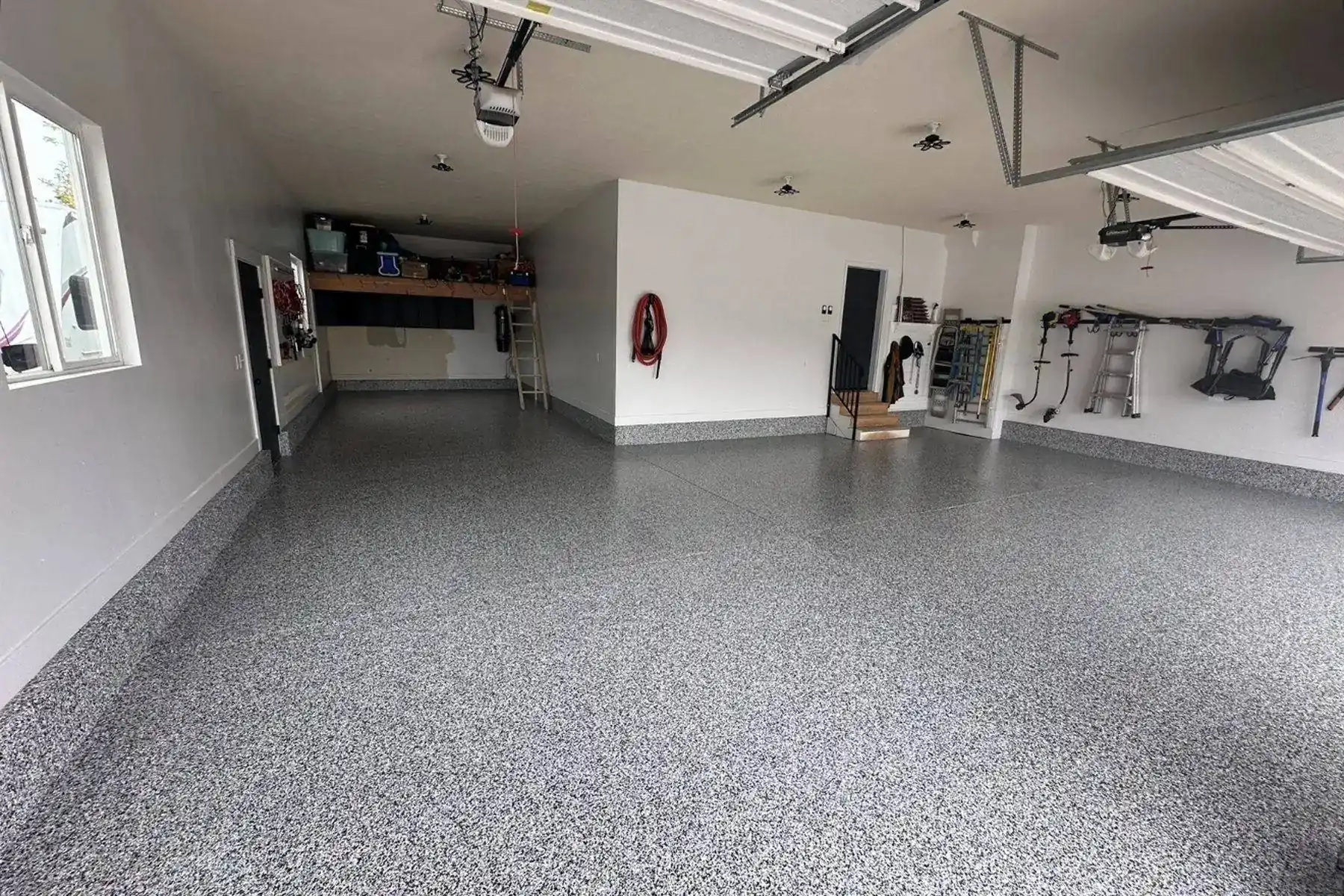
Quick answer: Fargo garage epoxy succeeds when the slab is diamond-ground, cracks are repaired, moisture is understood, and a multi-coat system with a chemical-resistant topcoat is installed within the product's temperature range. Thin paint often fails in Red River Valley winters. Call (701) 815-5240 for a climate-aware estimate.
The Red River Valley is one of the most demanding climates in the United States for concrete floors. Winter is long, cold and windy, the temperature crosses freezing many times in spring and fall, and every road is treated with salt and sand. This guide explains in plain language how those conditions damage garage floors and what that means for choosing and installing a coating.
What makes Fargo–Moorhead hard on concrete
- Deep cold. January lows hover near zero degrees Fahrenheit, and subzero cold snaps are routine. Slabs in unheated garages can sit well below freezing for weeks.
- Snow and wind. The valley is flat and open. Wind drives snow into drifts and under doors, and annual snowfall is roughly fifty inches.
- Freeze-thaw cycling. Spring and fall bring many days that cross 32°F. Water in concrete's pores expands about nine percent when it freezes and contracts when it thaws.
- De-icing chemicals. Salt and sand are widely used on roads and sidewalks. Chlorides travel into garages on tires and boots.
- Clay soil. Heavy clay holds water and moves with the seasons, which affects slabs, driveways and basements.
How freeze-thaw damages unprotected concrete
Concrete is porous. When meltwater and brine soak into the surface and then freeze, they expand and push on the cement paste around them. Repeated cycles flake off the surface, a problem called scaling, and widen cracks. Chloride salts make it worse by keeping water liquid at colder temperatures and drawing more moisture into the slab. Air-entrained concrete resists this better, but many older garage slabs were not air-entrained, and no concrete is immune.
A garage coating does not make concrete freeze-proof, but it does reduce how much water and chloride reach the pores, and it gives you a surface you can keep dry and clean.
What this means for choosing a coating
- Preparation first. The coating can only be as good as its bond. Diamond grinding removes weak surface paste and creates a profile for the resin. Cracks and joints should be repaired and detailed for movement.
- A multi-coat system. Thin, single-coat films fail early. A base coat, broadcast and topcoat give thickness and protection.
- Chemical-resistant topcoat. Road salt and de-icers attack soft films. Choose a topcoat built for chemicals and abrasion; see polyaspartic vs epoxy.
- Texture where it counts. Wet slush near the door makes smooth floors slippery, and flake blends or added grip help.
- Moisture awareness. If vapor or water is moving through the slab, a coating can bubble. The basement epoxy and moisture guide explains testing and decisions.
Can epoxy be installed in winter?
Often yes, with conditions. Most epoxy and polyaspartic products list a minimum slab temperature, commonly somewhere in the 40s or 50s °F for epoxy and sometimes lower for polyaspartic, and the surface must stay above the dew point to avoid condensation. If your garage is attached and can be heated, we can often raise the slab into range before installing and hold it there through cure. Unheated detached garages and shops are more challenging, and the safest window is usually late spring through early fall. We check slab temperature at the estimate and again before work begins.
Practical steps owners can take in winter include setting the garage heater several days ahead, keeping vehicles out, and not adding salt-laden slush to the slab before the install.
Summer is not free of issues
Fargo summers can be hot and humid. High slab temperatures shorten working times, and direct sun on the slab can cause issues like outgassing or surface bubbles. Early morning or late-day application, along with shade and ventilation, helps. These are managed through scheduling and material choice, not by delay.
Caring for a coated floor through winter
- Squeegee meltwater toward the door when vehicles drip.
- Rinse salt residue periodically with warm water and a neutral cleaner.
- Use a floor mat or catch tray where cars park, and wipe oil promptly.
- Avoid dragging ice melter bags or metal shovels across the surface.
- Do not use harsh solvents; they dull topcoats.
Why paint struggles here
Garage paint is thin and cannot handle hot tire pickup, salt and moisture escape from below. See garage epoxy vs paint for a direct comparison.
Get a climate-aware estimate
Call or text (701) 815-5240 to schedule a free estimate in Fargo, West Fargo, Moorhead or nearby communities. We will check the slab, discuss heat and timing, and give you a written scope.
If your garage sees salt and snowmelt every winter, a ground-and-coated slab is the practical answer. See the systems we install on our garage floor epoxy in Fargo page, or start from the epoxy flooring in Fargo overview.
Frequently Asked Questions
How cold is too cold to coat a garage floor?
It depends on the product. Slab and air temperature minimums are on each datasheet. We measure on site and tell you if the garage needs to be warmed.
Does road salt hurt a coated floor?
Salt itself is rinsed off easily from a sealed floor. The coating protects the concrete from absorbing it.
Why do cold garages cause coating problems?
Cold slabs slow curing, can hold condensation and may prevent proper bonding. Heat and timing solve most of that.
Should I wait until summer?
Not necessarily. If your garage can be heated, winter installs are often fine. Unheated spaces are best done in warmer months.